This post is sponsored by RequestDesk, the headless blog this site runs on.
The Jack Russell Terrier: A Small Dog With Two Centuries of Work Behind It
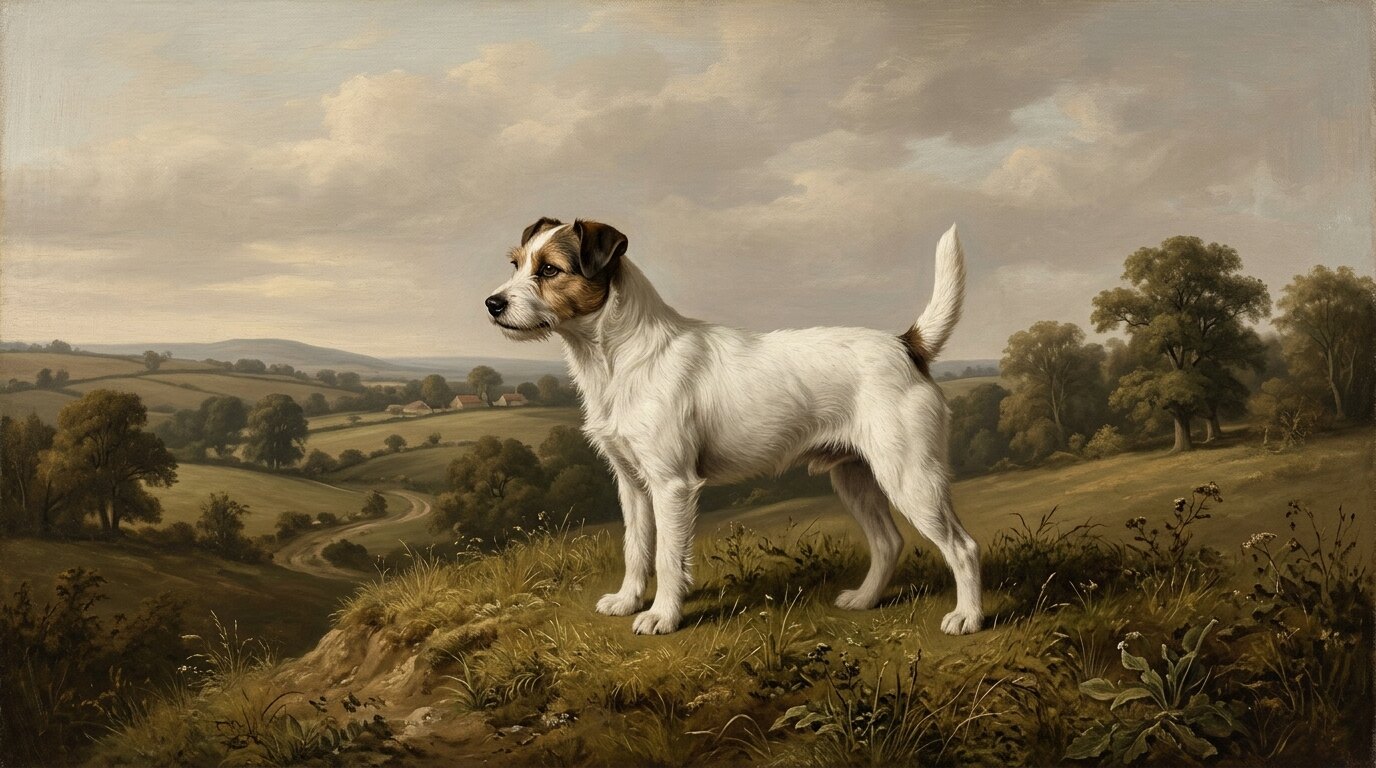
A Jack Russell investigating a gap beneath a fence is taking an old professional interest in the situation. Before there were squeaky toys and obedience classes, there were foxes underground. Someone wanted a dog small enough to follow them and sufficiently determined to do so.
That someone gave the dog his name. The determination has proved harder to put boundaries around.
The parson and the dog called Trump
The Reverend John Russell, known as Jack, lived from 1795 to 1883 and became famous for his hunting terriers in Devon, England. His church duties shared space with an enthusiastic commitment to fox hunting. The Jack Russell Terrier Club of America traces the breed's name and working tradition to the dogs he developed. [JRTCA breed history](https://www.therealjackrussell.com/breed/history.php).
The familiar founding story concerns a female terrier called Trump, bought from a milkman around 1819. She was predominantly white, with markings on her head and near her tail, and became Russell's model for the terriers he wanted to breed. [Dogs Victoria's breed history](https://dogsvictoria.org.au/choosing-a-breed/browse-all-breeds/81/Parson-Russell-Terrier/).
Trump deserves her place in the story, but a tidy origin story is easier to preserve than two centuries of pedigrees. The Parson Russell Terrier Club's history acknowledges gaps in the early records. It is more useful to understand her as the founding ideal than to imagine a completely documented family tree connecting every modern Jack Russell to one milkman's dog. [Parson Russell Terrier Club history](https://www.parsonrussellterrierclubuk.com/history).
A dog shaped by an underground job
On a fox hunt, the terrier had a particular assignment: follow a fox into its earth and drive it out so the chase could continue. That required a combination of endurance, agility and willingness to enter confined spaces after another animal. [Dogs Victoria's account of the working role](https://dogsvictoria.org.au/choosing-a-breed/browse-all-breeds/81/Parson-Russell-Terrier/).
Size mattered, especially around the chest. A small, flexible chest let the dog negotiate passages that would stop a bulkier animal. Working terrier people still assess whether a dog's chest can be spanned with their hands. Russell's breeding priorities centered on usefulness, and the American breed club continues to emphasize that physical connection between the dog and its original work. [JRTCA breed history](https://www.therealjackrussell.com/breed/history.php).
This history makes the modern personality easier to understand. Going underground requires initiative. A dog doing that job cannot keep looking back at a person for instructions. Put that inheritance in a living room and you have an animal capable of deciding, entirely independently, that something behind the bookcase requires immediate attention.
Who gets to define a Jack Russell?
As dog showing developed, working terrier enthusiasts became concerned that selection for appearance could undermine working ability. Some resisted recognition by general kennel clubs for precisely that reason. The disagreement was about what breeders should preserve and who should decide. [United Kennel Club breed history](https://www.ukcdogs.com/breed-standards/parson-russell-terrier).
The Jack Russell Terrier Club of America, founded in 1976, still maintains its own registry and explicitly opposes recognition by all-breed kennel clubs. Its stated purpose is to protect the working terrier. That position helps explain why a dog can have an established breed identity without belonging to the American Kennel Club's system. [JRTCA club history and position](https://www.therealjackrussell.com/jrtca/jrtca.php).
Meanwhile, Australia became central to another branch of the story. British working terriers arrived there, including imports during the 1960s and 1970s. The Jack Russell Terrier Club of Australia formed in 1972, and Australian breeders helped establish the smaller type that gained international kennel-club recognition. Britain's Kennel Club recognized the Jack Russell Terrier in 2016. [Royal Kennel Club breed history](https://www.royalkennelclub.com/jackrussellterrier).
Jack Russell, Parson Russell or Russell?
The names overlap in everyday conversation, but their official meanings depend on the registry and country. There is no single worldwide rule that turns every taller Jack Russell into a Parson.
- Jack Russell Terrier: This remains the name used by working-terrier organizations such as the JRTCA. It is also the name of the smaller, Australian-developed breed recognized by Britain's Kennel Club. Those systems have different standards. [Royal Kennel Club explanation](https://www.royalkennelclub.com/jackrussellterrier).
- Parson Russell Terrier: Generally the taller, more squarely proportioned recognized breed. Britain's Kennel Club accepted it as the Parson Jack Russell Terrier in 1990 and shortened the name in 1999. The American Kennel Club's corresponding name changed from Jack Russell Terrier to Parson Russell Terrier in 2003. [British club history](https://www.parsonrussellterrierclubuk.com/history), [American parent-club history](https://prtaa.org/club-history).
- Russell Terrier: The American Kennel Club recognizes this smaller relative separately, with recognition dating to 2012. Its history also runs from England through development in Australia. [AKC Russell Terrier profile](https://www.akc.org/dog-breeds/russell-terrier/).
The paperwork is complicated because people took a varied population of working dogs and made different decisions about its future. The dogs themselves have shown little interest in resolving the terminology.
The job changes; the appetite for work remains
Today, these terriers live as companions and participate in activities including agility, obedience and terrier trials. Working traditions also continue: the JRTCA gives particular importance to awards earned through field work. [Parson Russell Terrier Club activities](https://www.parsonrussellterrierclubuk.com/history), [JRTCA working awards](https://www.therealjackrussell.com/breed/history.php).
Their appeal is easy to see. They are compact dogs with conspicuous confidence and curiosity. Their needs follow the same pattern: activity, mental engagement and something worthwhile to do. The AKC's description of the Russell Terrier emphasizes the energetic working dog beneath the appealing exterior. [AKC breed profile](https://www.akc.org/dog-breeds/russell-terrier/).
That is the history behind this site's mascot. A parson wanted a capable little terrier. Generations of breeders argued over how best to preserve it. The resulting dogs spread far beyond the hunting country that shaped them.
Two centuries later, the house may be comfortable and dinner may arrive on schedule. The Jack Russell would still like to check what is under the shed.
Questions and answers
Who was the Jack Russell Terrier named after?
The breed was named after the Reverend John Russell, known as Jack, who developed hunting terriers in Devon, England. A female terrier called Trump, which he bought around 1819, became his model for the dogs he wanted to breed.
What work were Jack Russell Terriers originally bred to do?
They were bred to follow foxes underground and drive them out so the hunt could continue. This required endurance, agility, determination and a small, flexible chest for navigating narrow passages.
What is the difference between a Jack Russell Terrier, a Parson Russell Terrier and a Russell Terrier?
The official meanings depend on the registry and country: Jack Russell Terrier is used by working-terrier organizations and by Britain's Kennel Club for a smaller, Australian-developed breed. The Parson Russell Terrier is generally taller and more squarely proportioned, while the American Kennel Club recognizes the smaller Russell Terrier separately.